

Real Talk: You're Probably Going to Need Vaginal Estrogen Cream
Let's continue our conversation about genitourinary syndrome of menopause.


Hello from Ohio! We arrived back home late last week after a 3400 mile road trip from Utah - because if you’ve got to get a car back to Ohio, you may as well take the scenic route!
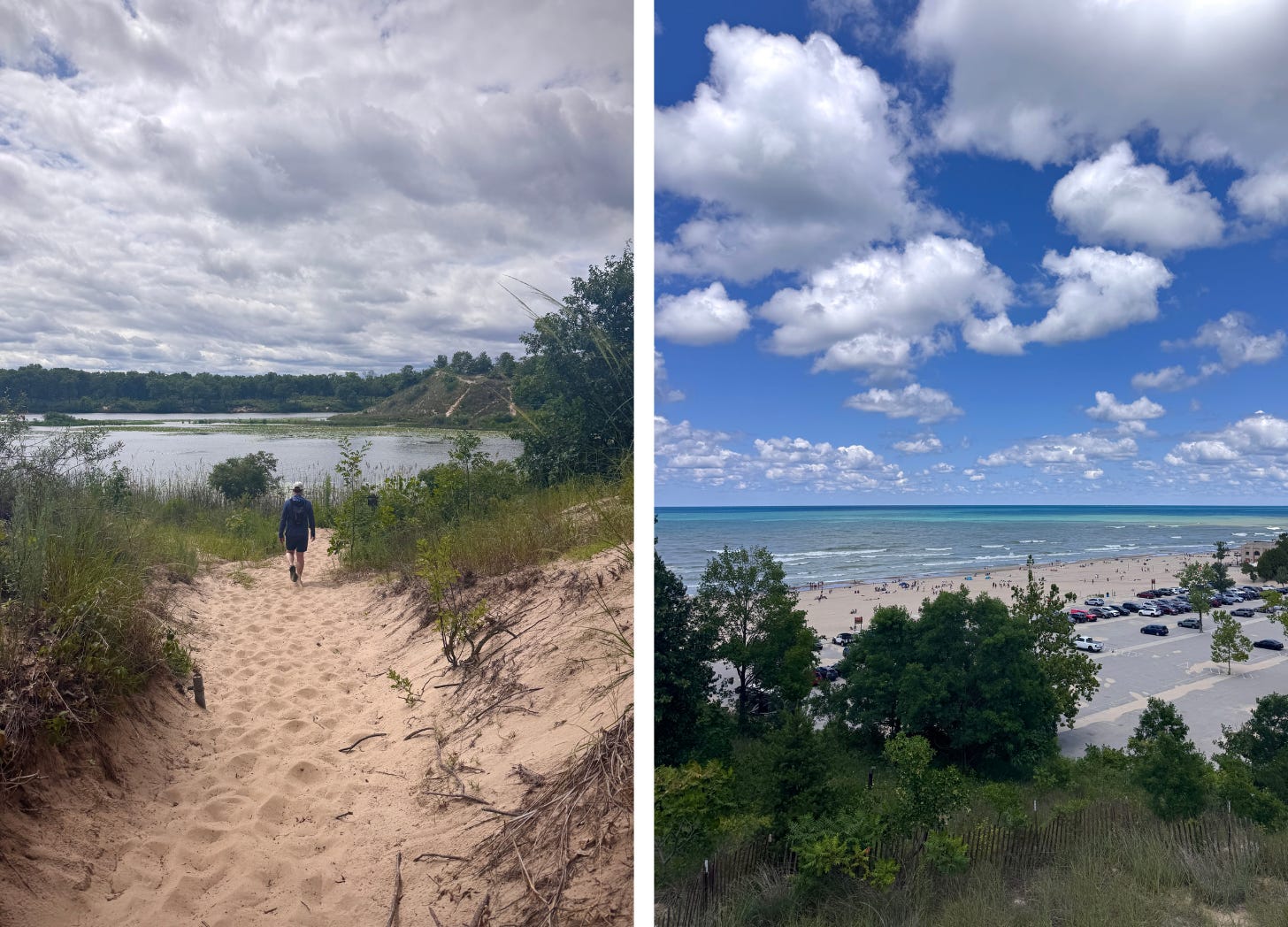
We visited Wind Cave National Park, Custer State Park (the highlight of the trip - this state park is GORGEOUS!), Devil’s Tower, Theodore Roosevelt National Park (and the new presidential library - another highlight) and finally Indiana Dunes National Park. We somehow avoided both wildfire smoke and extreme heat and loved all the time spent outdoors in often other-worldly landscapes.
Here are a few pictures in case you’re curious:



Alright, back to menopause content. Last week’s newsletter was a basic overview of genitourinary syndrome of menopause (GSM), which will impact most women either during the menopause transition or after. This week I’m writing about GSM impacts to the vulva and vagina, so buckle up.
As a reminder, we’re tackling this topic without even a smidgeon of shame. No gasping or clutching of pearls allowed, got it?
With that out of the way, let’s get started!
First, can you review some anatomy?
Yep! The vulva refers to your outside body parts between the base of the pubic bone to just before the anus: the clitoris, the urethra, labia majora and minora (i.e. the outer and inner lips), and the vaginal opening, etc.
The vagina refers to the inside fibromuscular tube that connects the vulva with the uterus.
Also, remind me why changes happen?
Both the vulva and vagina rely on estrogen to keep tissues healthy, plump, lubricated and strong. As estrogen declines during the menopause transition, both the tissue and the microbiome in those areas change, regardless of the severity of other menopause symptoms. When these changes occur, it’s called genitourinary syndrome of menopause (GSM).
Without intervention, approximately 80% of women will report symptoms of GSM either during the menopause transition or in the years after. And symptoms will most likely persist without treatment.
Give it to me straight. What changes should I expect?
The most common symptom of GSM is vaginal dryness but other symptoms include:
Vaginal and vulvar itching, burning, irritation, bleeding, pain
Pain with vaginal penetration (many women refer to this as “sandpaper sex”)
Irritation of the skin after wiping
Clitoral pain, shrinkage and difficulty reaching orgasm
Chronic infections (yeast and UTI, among other things)
Changes in smell and discharge
Good grief. Please tell me there are easy ways to treat GSM!
I have good news: vaginal estrogen therapy (prescription medicine formulated as a cream, tab or ring that stays in the vaginal area) is safe and generally a great option for restoring vaginal and vulvar tissues.
Systemic hormone therapy (prescription hormone therapy that circulates through your whole body, commonly known as HRT or MHT) can also be helpful, but generally isn’t the first line of defense for GSM.
Some women will need both systemic hormone therapy and local vaginal estrogen therapy to treat their GSM symptoms, so be sure to bring it up with your care provider if your symptoms aren’t managed with just one or the other.
There are other prescription options as well such as Ospemifene and Prasterone. Your gynecologist and/or menopause specialist should be able to walk you through the best course of action.
What else can I do to take care of fragile vulvar and vaginal tissue?
So many things! Here are some ideas:
Find a lube you love and make it non-negotiable during sex. Silicone and oil based lubes work great. Water based lube is more likely to be irritating, so unless you want to do some research and spend time looking at ingredient lists, I’d find a silicone or oil based lube that you like the feel of. Coconut or olive oil can also work as lube and are safe for delicate tissue.
Moisturize! There are lots of over-the-counter vaginal moisturizer options. Especially vaginal moisturizers containing hyaluronic acid, which is a large molecule found in and around skin cells that lubricates and hydrates cells. Avoid anything with fragrance, as it can be irritating.
Switch from soap to cleanser. The vagina and vulva are basically a self-cleaning oven and don’t need soap to stay clean. But if the idea of washing up with just water makes you uncomfortable, use an unscented cleanser which will keep the protective layer of the skin intact. CeraVe or Cetaphil cleansers work great, and you can get a foaming cleanser from either brand if you still want something that suds.
Change your wiping strategies. Blot yourself clean instead of wiping after peeing, and avoid wet wipes as most wipes contain ingredients that will irritate delicate vulvar skin.
Leave a landing strip. Pubic hair helps trap moisture against the vulva which is important as estrogen declines and vulvar skin thins and dries out. Removing pubic hair (by waxing or shaving) also damages the top layer of the delicate skin and leaves it vulnerable to irritation and infections.
Anything else I should know?
Always (haha).
First, a note about vaginal rejuvenation lasers and radio frequency devices. While these therapies are commonly available, neither the American College of Obstetricians and Gynecologists nor the Menopause Society recommends them for GSM. Good data on safety and efficacy isn’t available yet, and these treatments come with risks. In plain english: they are experimental procedures so proceed cautiously.
Second, a reminder that most doctors, nurse practitioners and PA’s didn’t receive adequate medical training when it comes to menopause. You can look up a menopause-trained doctor in your area at this website or book a telemedicine appointment with a menopause specialist through Gennev (I have no affiliation with Gennev, I just really like the founders of the company and trust them to deliver ethical, quality care).
And finally, if you want to dive deeper into GSM (or other menopause related topics) I highly recommend subscribing to both Dr. Jen Gunter’s substack and Dr. Lauren Streicher’s substack - both of whom are board certified OB/GYN’s and menopause experts, which means they are particularly well-qualified to talk about menopause impacts to the vulva and vagina.
Next newsletter, we’ll dive into the urinary tract, pelvic floor and bladder impacts of menopause. In the meantime, I’m sending you lots of love and well wishes for a healthy, happy, plump, moisturized vulva and vag today, tomorrow and forever.
xo, Rebecca
P.S. It’s so important to start the day RIGHT!!!!